Why Jaén produces more olive oil than any country in the world
Sixty-six million olive trees in a single province: how it came about, what makes it possible, and the cost of depending on one crop.
Written by The Villafranca Bonilla family8 min read
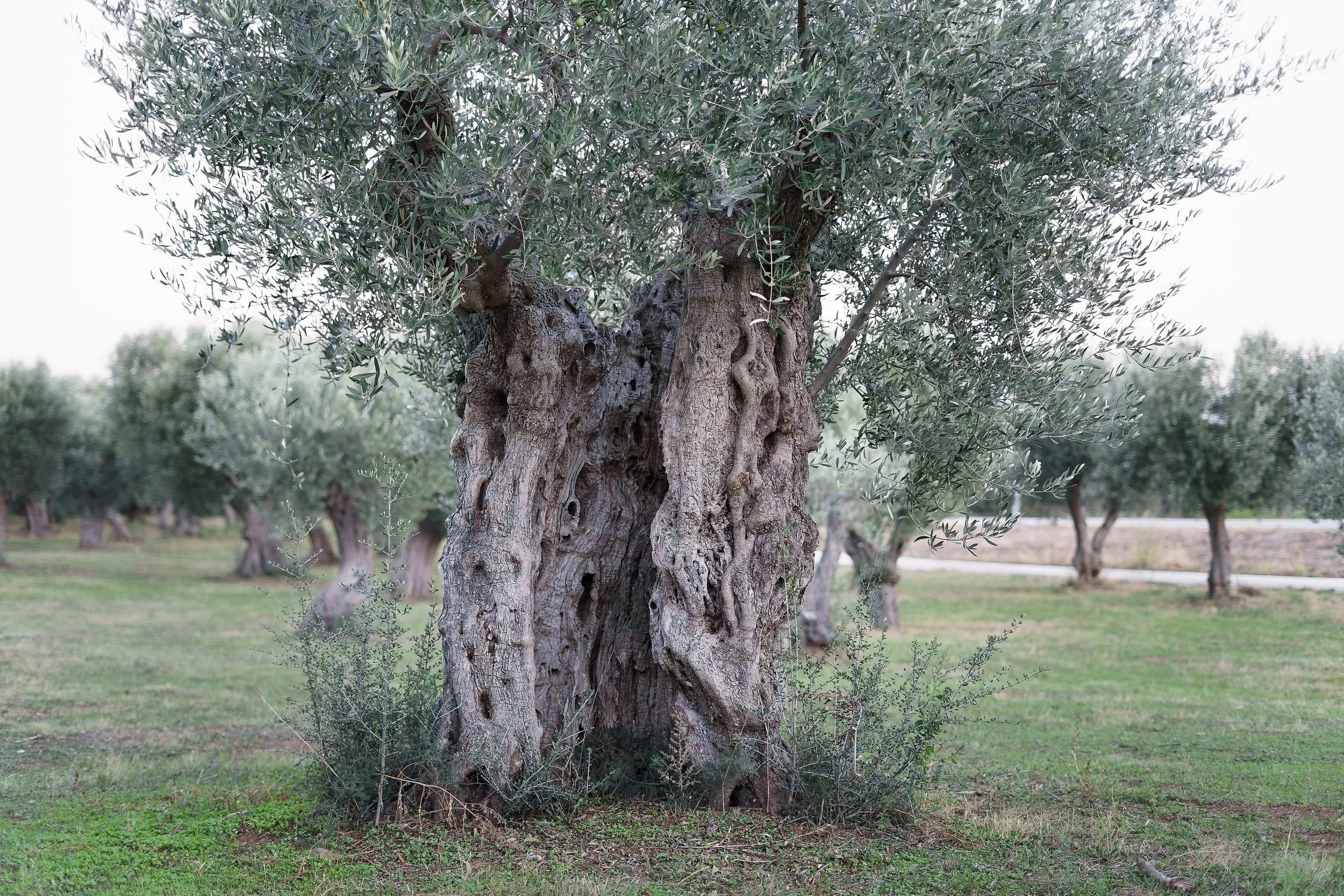
Through a combination of climate, soil and a historical decision taken across two centuries: the olive displaced everything else. There are around sixty-six million olive trees in the province today and, in a normal season, Jaén alone produces more oil than Italy or Greece, the world’s second and third producers.
That statistic gets repeated a great deal and almost never explained. Here is how it came about, what makes it possible, and what it costs to live off a single crop.
The figure, with its caveat
Worth stating precisely, because exaggerated versions circulate.
Spain is by a wide margin the world’s leading producer of olive oil. Within Spain, Andalusia holds most of it, and within Andalusia, Jaén is the leading province. The result is that one province, in a normal season, produces more oil than entire countries with long olive traditions.
The important qualifier is “in a normal season”. Rain-fed olive groves depend on rainfall, and the olive is additionally alternate-bearing: it tends to swing between a heavy year and a light one, because the effort of a big crop leaves the tree without reserves for the next. Between alternate bearing and drought, production can halve from one season to the next.
And because Jaén weighs so heavily in the world total, a bad season here moves the price of olive oil across the planet. It is one of the few cases where what happens on some Andalusian hillsides shows up on a supermarket shelf in Germany.
Why here and nowhere else
Three reasons combine, and none alone would have been enough.
Climate. The olive wants dry, hot summers and mild winters — but with enough cold. It needs a minimum number of chilling hours in winter to flower properly, and it does not tolerate hard, prolonged frost. Inland Andalusia supplies exactly that: punishing summers, cool winters without extremes.
Soil and relief. Much of the province is limestone, stony and shallow, on rolling hills and slopes. This is land where cereals yield poorly and most crops struggle. The olive copes: deep roots, drought tolerance, and it produces where little else will.
And the absence of an alternative. This is the least-mentioned reason and probably the most decisive. On sloping land, without irrigation, with summers above forty degrees, the agricultural options narrow sharply. The olive did not win by being the best business: it won by being the only one that worked everywhere.
How this landscape was made
The olive has been here since antiquity, but the landscape you see is far more recent than it looks.
Antiquity. The Guadalquivir valley was one of the great olive oil exporting regions of the Roman Empire. Oil travelled in amphorae made in kilns along the river itself and reached Rome in enormous quantities: in the capital there is an entire hill formed from the fragments of those amphorae, accumulated over centuries as they were emptied. A good part of the oil they held came from this valley.
The Middle Ages and early modern period. The olive persists but shares the territory with cereals, vines, scrub and extensive grazing. Nothing resembling monoculture.
The eighteenth and nineteenth centuries. Here the transformation begins. Land reforms put large quantities of ground into circulation, and the olive — needing little annual investment and giving a product that keeps and travels well — became the logical bet. It began replacing everything else.
The twentieth century. Mechanisation, treatments and above all accession to the European Union with its support for olive growing accelerated the process. Districts that still had a mosaic of crops turned into unbroken grove. That is when the landscape took the form it has now.
The harvest, which was the province’s social engine
This deserves its own section, because it explains much of what Jaén is.
For generations, the olive harvest was the economic and social event of the year. From November to January whole villages organised around it: gangs of pickers, the foremen who hired them, wages that had to be stretched across the rest of the year. People came from outside — from Granada, Extremadura, La Mancha — because a great many hands were needed.
Picking was done with poles and nets: you strike the branches and the fruit falls onto cloths spread beneath. Hard work, in the cold, at a pace that is difficult to imagine now.
All of that has changed within a few decades. The trunk shaker, which grips the tree and vibrates it, did in an afternoon what used to take days. In hedgerow groves, a continuous harvester drives down the row like a grape harvester and replaces an entire gang.
The outcome is contradictory and should be stated whole: far more is produced, with far less physical toil and fewer injuries, and at the same time the grove no longer feeds the people it used to. The depopulation of many villages in the province has one of its main causes there.
In mountain groves, on slopes, mechanisation arrived less and arrived worse: in the steepest parcels it is still done much as it always was. That is simultaneously what makes that oil expensive and what keeps those hillsides worked.
What the monoculture gets right
Not all of it is a problem, and that is worth saying:
Accumulated knowledge. When an entire province has been doing one thing for two centuries, it knows how. There are mills, machinery, laboratories, schools and people who grew up among olive trees. That is hard to improvise elsewhere.
A complete industry. Not just growing: milling, bottling, analysis, research. Jaén has olive research centres of international standing.
Protected soil. Rain-fed hillside grove, with vegetation cover, holds the ground on terrain that would erode far faster without it.
And quality, where it is sought. Jaén’s premium oils are now among the best regarded in the world. That was not the case thirty years ago, when most of the province’s oil left in bulk with no name on it.
And what it gets wrong
Being the world’s largest olive grove has a side that should not be hidden:
Total dependence. When the season goes badly, it is not the grove that suffers, it is the province. There is no second crop to cushion it.
Water. The expansion of irrigation has raised production greatly and put considerable pressure on water resources that do not stretch to everything, in a region facing ever more frequent drought.
The bulk price. Most oil is still sold in bulk at commodity prices. The grower is a price-taker: they receive whatever oil is worth that month, whatever it cost them. There are seasons when producing costs more than selling.
And the groves that do not pay. Mountain, sloping, rain-fed, widely spaced: the most expensive to work and the lowest-yielding per hectare. It is also the one that gives the most concentrated oils. Many of those parcels are being abandoned because the arithmetic fails, and it is a loss that is hard to reverse: an olive tree takes years to produce.
What alternate bearing does to a season
Worth understanding, because it explains why olive oil prices swing as they do and why producers talk about seasons the way they do.
The olive tends towards alternate bearing: a heavy crop one year, a light one the next. The mechanism is straightforward — carrying a large quantity of fruit consumes the reserves the tree would otherwise put into forming next year’s fruiting wood. It is not a fault, it is how the tree works, and pruning can moderate it but not eliminate it.
Layer drought on top and the swing becomes severe. A dry spring damages flowering, a dry summer means smaller fruit, and a rain-fed grove has no way to compensate.
The result is that two consecutive seasons from the same grove are never really comparable, and that a region producing at Jaén’s scale transmits its own variability to the world price. When people ask why olive oil became so expensive, the answer usually starts here rather than with anything happening in a shop.
Where a small estate fits into this
With that context it becomes clearer what we do and why.
In a province producing at this scale, a family holding does not compete on volume — it would be absurd to try. What it can do is the opposite of what bulk selling demands: pick green even though it yields less, mill the same day even though it complicates the logistics, and bottle the oil of one estate and one season.
None of those three decisions makes sense if you sell in bulk at the market price. All of them make sense if you sell directly to the person who is going to eat it and can tell them where it came from.
That is, fundamentally, the only play available to a small grove in Jaén: not to produce more cheaply, but to produce something that cannot be bought in bulk. The regional map is in Jaén olive oil: regions and PDOs.
500 ml bottle
Dark glass. Our everyday size.
€12.50€25.00 per litre
See the half-litre bottleFrequently asked questions
- How many olive trees are there in Jaén?
- Around sixty-six million, across more than half a million hectares covering much of the province. It is the largest concentration of olive grove in the world and resembles no other European agricultural landscape: the crop does not coexist with others, it has replaced them almost entirely across whole districts.
- How much olive oil does Jaén produce a year?
- It varies enormously between seasons, because the olive alternates heavy and light years and because rain-fed groves depend on rainfall. In a good season Jaén alone produces more oil than Italy or Greece, the world’s second and third producers. In a drought year it can fall by more than half, and that moves the price of olive oil worldwide.
- How long has olive oil been produced in Jaén?
- Since antiquity: the Guadalquivir valley exported oil to Rome in amphorae made in the valley itself. But the landscape you see today, of unbroken olive grove to the horizon, is considerably more recent. It formed mainly between the eighteenth and twentieth centuries, when the olive displaced cereals, vines and scrubland across whole districts.
Keep reading
- Jaén olive oil: regions, PDOs and what sets them apartThe full map of Jaén olive oil: plains and mountain ranges, the four denominations of origin, and what to expect from each part of the province.
- Rain-fed or irrigated olive oil: what changes in the glassWhy a thirsty olive tree makes a more concentrated oil, how much less it yields, and why almost no label ever tells you which one you bought.
- Olive oil tourism in Jaén: visiting a family grove during harvestWhat you see in a grove in full harvest, when to go, what to ask, and how a family estate differs from a visitor centre.
Want to taste it?
Everything on these pages ends up in the same bottle: rain-fed Picual from Marmolejo, picked green and milled the same day.
See sizes and prices