Jaén olive oil: regions, PDOs and what sets them apart
The full map of Jaén olive oil: plains and mountain ranges, the four denominations of origin, and what to expect from each part of the province.
Written by The Villafranca Bonilla family9 min read
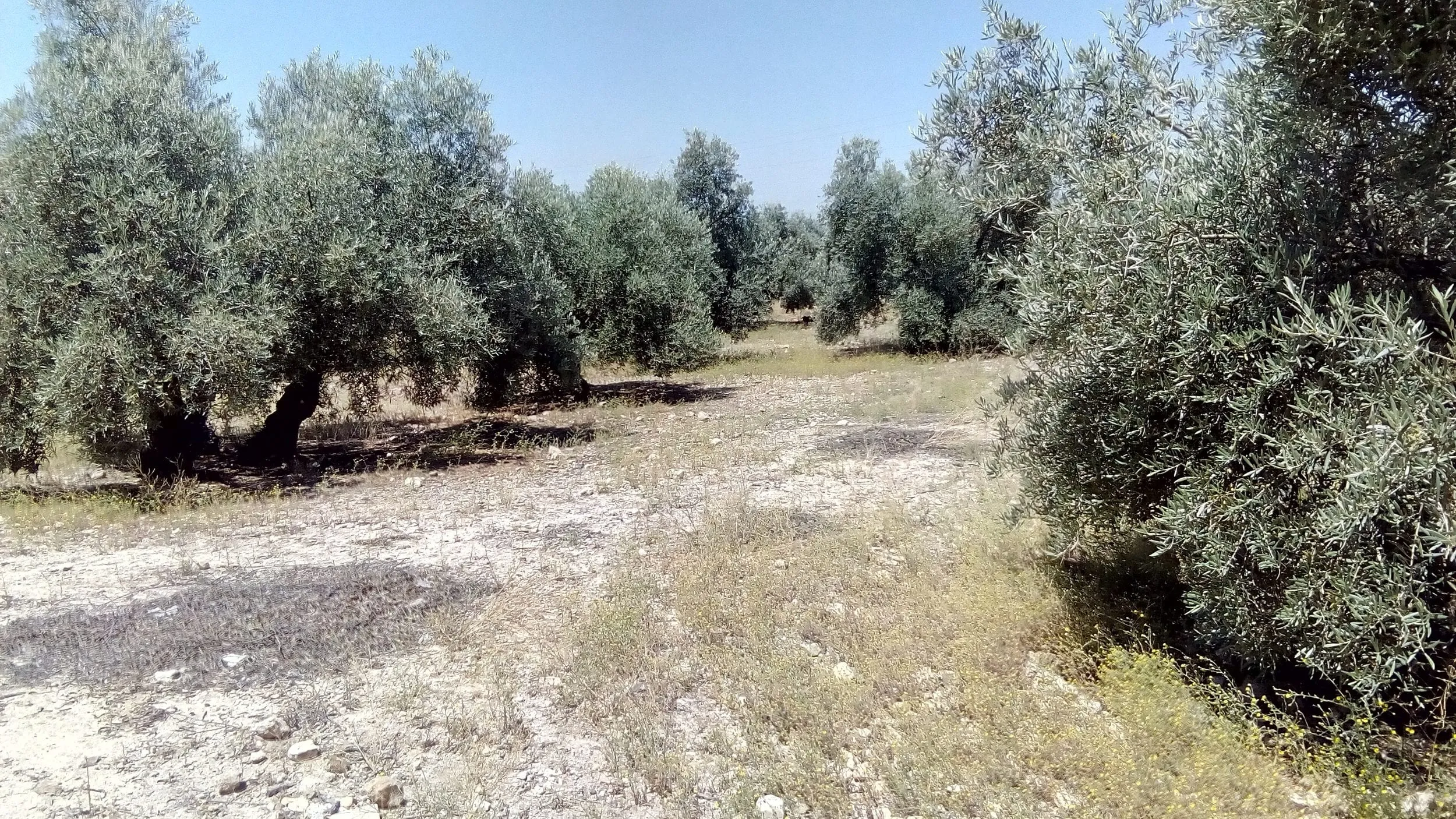
Jaén means Picual and enormous scale, but it is not uniform: there is a real difference between the oils of the eastern mountains and those of the central plains, and four denominations of origin that cover nowhere near the whole province. Knowing which district an oil comes from tells you a good deal about what to expect when you open it.
Here is the map, district by district, with what each terrain contributes and where each PDO sits. And also where none of them reach, which is where we are.
First, the scale
Worth having the magnitude in mind, because it explains everything else.
Jaén holds roughly sixty-six million olive trees spread across virtually the whole province. It is the largest olive-growing territory on the planet: in a normal season this single province produces more oil than Italy or Greece, the world’s second and third producers. Only Spain as a whole exceeds it, and only because Jaén is inside Spain.
That has a consequence in the landscape that startles first-time visitors: the olive is not one crop among several, it is the entire landscape. Kilometres of ordered rows climbing the hillsides with barely a break, villages appearing like islands. How it got that way is in why Jaén produces so much olive oil.
The variety: Picual, and little else
Before the map, the thing that simplifies it: Picual dominates overwhelmingly. All four PDOs have it as their principal variety, and in many districts it is practically all there is.
It is a variety with very marked character: intense fruitiness, clear bitterness and pungency, notes of tomato plant, olive leaf and green almond. And it has an important technical peculiarity: it is the most stable of the major Spanish varieties, thanks to a high oleic acid content and a high phenolic load. It survives longer in the bottle and behaves better in a pan.
The province’s most interesting exception is Royal, a local variety from around Cazorla that gives quite different oils — softer and fruitier, with ripe-fruit notes. It is scarce and worth seeking out.
How Picual compares with the rest is in the four varieties compared.
Mountain or plain: the division that matters
Before individual districts, the distinction that explains most of the variation.
Mountain groves sit on slopes, at altitude, and almost always without irrigation. Trees are spaced more widely because the soil is poorer and water scarcer. The result is less fruit per tree and more concentrated fruit: more body, more bitterness, more pungency. And they ripen more slowly, because cooler nights at altitude delay the colour change.
Plains groves sit on flat or gently rolling ground, with deeper soils, more scope for irrigation and full mechanisation. They give more kilos and milder oils, with a year-to-year consistency that mountain dry farming cannot match.
Neither is better. They are two products with different costs and profiles, and the underlying difference is developed in rain-fed versus irrigated.
The PGI that covers the whole province
Worth knowing before the four PDOs, because it is recent and many people are unaware of it.
Since 2020 there is a recognised «Aceite de Jaén» PGI (protected geographical indication), the first for extra virgin olive oil in Spain. Where a PDO delimits a single district, this one covers all 97 municipalities of the province, some 13,500 km².
What it requires:
- Extra virgin only.
- At least 85 % native varieties, and Picual is over 90 % of the grove in the zone.
- Harvest before 31 December, which rules out very late fruit.
- Registration with its regulatory council, which analyses, tastes and certifies.
The practical consequence is that a Jaén oil can have no PDO and still be covered by a European quality mark. That applies to whole districts outside the four delimitations, including the Sierra Morena strip where we are.
The four denominations of origin
| PDO | Where | Terrain | Principal variety |
|---|---|---|---|
| Sierra de Segura | Northeast | High sierra, steep | Picual |
| Sierra de Cazorla | East, around the natural park | Sierra and valleys | Picual and Royal |
| Sierra Mágina | Centre-south, flanks of the massif | Mid and high sierra | Picual |
| Campiñas de Jaén | West and centre | Flat and rolling | Picual |
Three of the four are mountain denominations and all four are Picual country. What distinguishes them is less the variety than the terrain: altitude, soil, rainfall and how the grove is worked.
What a PDO guarantees. That the fruit comes from the delimited area, that it was made according to a set of rules, and that a regulatory body verified it with analysis and tasting. That is solid information and it has value.
What it does not guarantee. Excellence. The rules set a floor, and clearing the floor is all that is required. Nor does it guarantee early harvest, dry farming, or that the oil comes from a single estate: most is certified through cooperatives pooling the fruit of hundreds of members.
The districts, one by one
Sierra de Segura
The northeast, the wildest corner of the province, around the Cazorla, Segura and Las Villas natural park. Genuine mountain olive growing, with slopes that rule out heavy machinery and small parcels wedged between scrub.
Expect: intense oils, marked green fruitiness, high bitterness and pungency. One of the districts with the strongest early-harvest tradition.
Sierra de Cazorla
South of the above, around the natural park. A mix of mountain and valley groves.
Expect: intense oils, and the chance of finding Royal, which gives something else entirely: softer, fruitier, with apple and ripe-fruit notes. One of the more singular things in Spanish olive growing, and it only does well here.
Sierra Mágina
Centre-south, on the flanks of the Mágina massif, the highest mountain in the province. Hillside groves, much dry farming, considerable altitude.
Expect: Picual with a great deal of personality, from one of the districts most recognised by critics. Firmly structured, bitter and peppery oils.
La Loma and Las Villas
The district around Úbeda and Baeza, between the Guadalquivir and the Guadalimar. Gentle rolling ground, deep soils, and some of the largest cooperatives in the province.
Expect: Picual with a more balanced profile, produced in very large volumes. It has no PDO of its own, which surprises people given its importance.
The plains
The central and western belt, flat ground, holding the greatest concentration of mechanised and irrigated grove in the province. This is where Campiñas de Jaén sits, the most recent of the four and the only non-mountain denomination.
Expect: milder, more consistent oils with very high yields per hectare.
Sierra Sur and El Condado
South and northeast respectively, two districts with significant olive growing and no denomination of their own. The Sierra Sur, around Alcalá la Real, has upland groves and good oils; El Condado is transitional country towards Sierra Morena.
Sierra Morena and north of the Guadalquivir
The northern strip, where the Guadalquivir valley begins to rise towards Sierra Morena: Andújar, Marmolejo, Bailén, Linares. Hillside groves, much dry farming, Mediterranean scrub all around.
This is where we are, and there is no PDO here. None of the four delimitations reaches this area. We say so openly, because concealing it would be odd and because it explains why an oil from Marmolejo carries no seal.
The season, and why it matters more here
One practical point specific to buying from a region this large.
The harvest in Jaén runs from late autumn into winter, with mountain districts generally later than the plains because altitude delays ripening. New oil begins appearing around November, and that is when it is at its most intense and most green. From there it softens month by month — it does not spoil, it fades.
The consequence for a buyer abroad is worth spelling out. A bottle bought in November or December is likely to be freshly made. One bought in September has probably been in the bottle for the best part of a year. Both may be perfectly good; they are not the same oil, and only the crop year on the label tells you which you have.
This matters more with Jaén oils than with mild ones, precisely because so much of what makes an early-harvest Picual distinctive is the part that fades first.
What to look for on a Jaén label
With all of the above, the practical part. Facing a bottle, in order:
- “Extra virgin” in the legal name. Without it, nothing else matters.
- The crop year. Voluntary and decisive: nobody prints the harvest of an old oil.
- The district or municipality, if stated. That is what tells you mountain or plain, and therefore what intensity to expect.
- The PDO, if it carries one, with its numbered back label — knowing what it certifies and what it does not.
- Whether it says rain-fed or early harvest. Neither is compulsory and both affect flavour more than the seal does.
The full walk-through is in how to read an olive oil label.
Which Jaén oil to choose
To close, a recommendation by profile, knowing there is a range within every district:
- You want intensity: mountain. Segura, Mágina, Cazorla, Sierra Sur or the Sierra Morena strip. And within that, early harvest.
- You want something gentle to start with: the plains, or a mountain oil picked later.
- You want something unusual: Royal from around Cazorla. It resembles nothing else.
- You want external verification: any of the four PDOs, with its numbered back label.
- You want a specific estate: here the PDO does not help, since it certifies an area rather than an individual origin. You need a producer who bottles their own, with or without a seal.
We are in that last group: Picual and only Picual, from one grove on the slope north of Marmolejo, rain-fed, picked green and milled the same day. No PDO, because none of the four reaches this far, and no other seal either at present — the province-wide «Aceite de Jaén» PGI does cover the municipality, but sitting inside a zone is not the same as carrying its label.
500 ml bottle
Dark glass. Our everyday size.
€12.50€25.00 per litre
See the half-litre bottleFrequently asked questions
- How many olive oil PDOs are there in Jaén?
- Four protected designations of origin: Sierra de Segura, Sierra de Cazorla, Sierra Mágina and Campiñas de Jaén. Between them they cover nowhere near the whole province, and important districts fall outside — La Loma, the Sierra Sur, El Condado and the strip of Sierra Morena north of the Guadalquivir. Since 2020 there is also the «Aceite de Jaén» PGI, which does cover all 97 municipalities. A Jaén oil without a PDO is not unusual: it is the norm.
- What is the difference between mountain and plain olive oil?
- Mountain oil tends to be more intense and ripens later: altitude slows maturation, night temperatures are lower, and the groves are almost always rain-fed and on slopes, which means less fruit and more concentration. Plains oil, on flat ground with more irrigation and full mechanisation, tends to be milder and more consistent from year to year.
- Is all Jaén olive oil Picual?
- The overwhelming majority, yes. Picual dominates the province and is the principal variety in all four denominations. There are interesting local exceptions, above all Royal around Cazorla, plus minor presence of other varieties, but in practice talking about Jaén olive oil means talking about Picual.
Keep reading
- Why Jaén produces more olive oil than any country in the worldSixty-six million olive trees in a single province: how it came about, what makes it possible, and the cost of depending on one crop.
- Picual, Arbequina, Hojiblanca and Cornicabra: which one is for youThe four big Spanish olive varieties compared: how each one tastes, what it suits in the kitchen, and which keeps best in the bottle.
- Rain-fed or irrigated olive oil: what changes in the glassWhy a thirsty olive tree makes a more concentrated oil, how much less it yields, and why almost no label ever tells you which one you bought.
Want to taste it?
Everything on these pages ends up in the same bottle: rain-fed Picual from Marmolejo, picked green and milled the same day.
See sizes and prices