Why does olive oil burn the back of your throat?
The peppery catch and the bitterness in extra virgin olive oil are not a fault. They are the signature of an olive picked green. Here is where they come from.
Written by The Villafranca Bonilla family8 min read
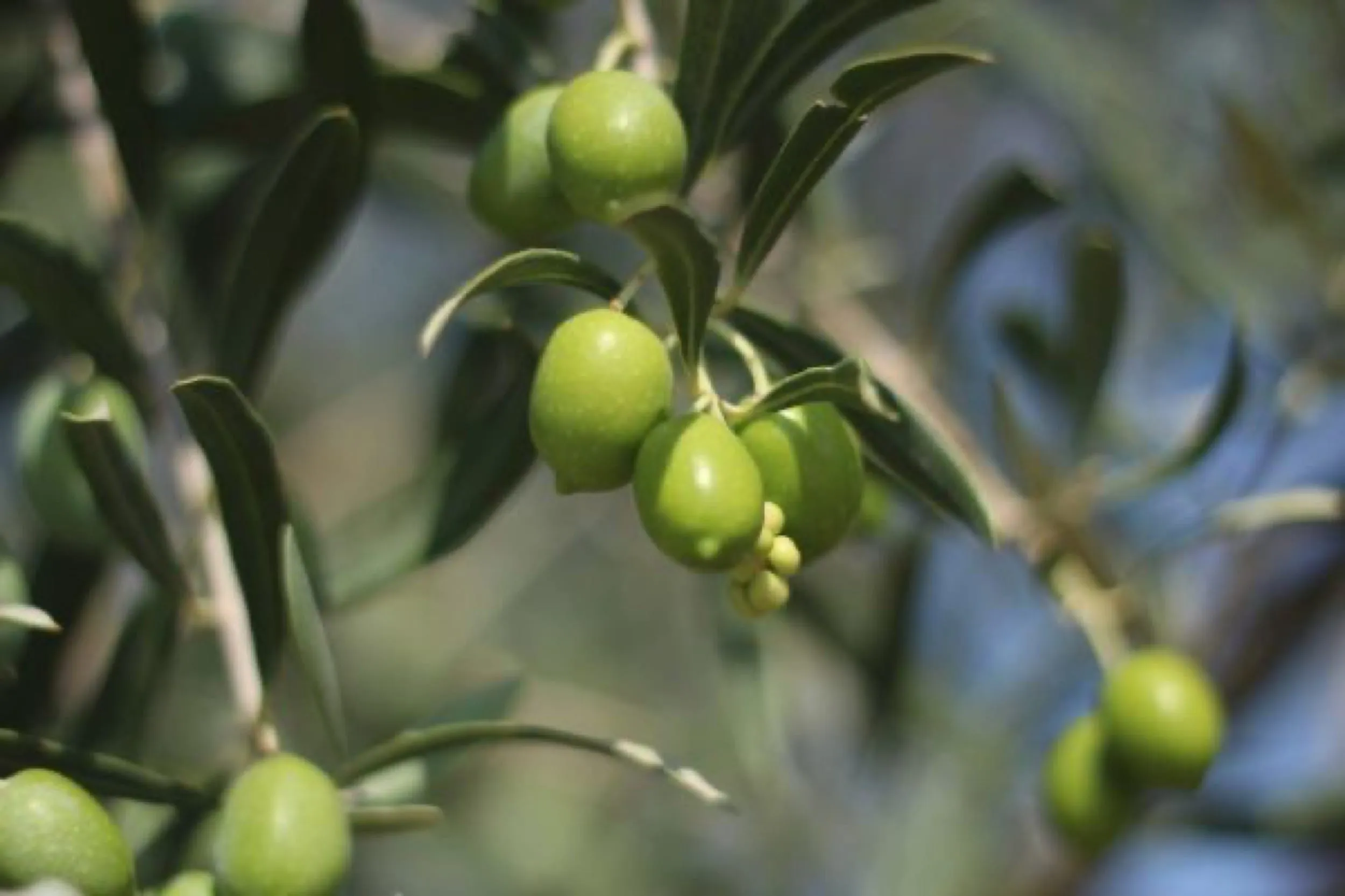
Because the olives were picked green. The peppery catch — and the bitterness that usually comes with it — are produced by compounds the olive carries while it is unripe and loses as it turns black. If the oil bites, the fruit went into the mill early. This is not a fault: in the official tasting panel for extra virgin olive oil, pungency is a positive attribute, exactly like fruitiness and bitterness.
That said, we understand the surprise. Most people arrive at real extra virgin from a supermarket oil that does nothing at all, and the first spoonful of an October Picual scratches. We get asked this so often that we would rather write it down properly.
What is actually doing the burning
Green olives carry a family of compounds the trade calls polyphenols. Two of them do nearly all the work:
- Oleuropein is behind the bitterness. It is what makes an olive straight off the tree inedible — if you have ever bitten one, you know exactly what we mean.
- Oleocanthal is behind the pungency. And it has an odd property: your tongue does not detect it. A receptor at the back of your throat does. That is why the catch in a good oil does not arrive immediately, but a second or two after you swallow, and only back there.
This is why olive oil pungency feels nothing like chilli. Chilli burns your whole mouth. Olive oil touches one specific spot and sometimes makes you cough. Tasting panels half-jokingly grade oils as “one-cough” or “two-cough”.
Why Picual bites harder than most
How much of those compounds an oil carries depends heavily on the olive variety, and the spread is enormous. Picual sits near the top. Arbequina, at the other end, gives soft, sweet, almost buttery oils with a very discreet catch.
Neither is better. They are for different jobs. A Picual like ours does more for a tomato than for a delicate white fish; an Arbequina, the other way round.
The three things that decide how much it bites
Within a single variety, the difference between an oil that scratches and one you barely notice comes down to three factors.
1. When it was picked
By far the biggest one. Green October fruit gives an intense oil, and gives little of it: you need far more kilos of olives to fill the same bottle. Black January fruit gives much more oil, softer and cheaper to produce.
We pick green. A good part of the price per litre you see on this site comes from that.
2. Whether the grove is irrigated
A rain-fed olive tree goes thirsty in summer. That water stress means less fruit, but more concentrated fruit. You taste it: more body, more bitterness, more pungency. Studies comparing the same variety with and without irrigation find very large differences in phenolic concentration.
Our grove sits on the slopes above Marmolejo and is never watered. That is not a marketing decision — up there, there is nothing to water it with.
3. How long it took to reach the mill
An olive is fruit, and fruit left in a heap ferments. If days pass between tree and mill, those compounds degrade and the oil loses intensity before it is even pressed. Whatever is picked in the morning goes into the mill the same day.
How pungency is actually measured
This is not a matter of impression: there is an official method and people trained to apply it.
A recognised tasting panel is made up of eight to twelve tasters. They taste the oil from a blue glass — blue on purpose, so colour cannot sway them: a vivid green oil primes you to expect bitterness, and that contaminates the judgement — and they score three positive attributes from zero to ten: fruitiness, bitterness and pungency. They also hunt for defects, which is the part that really decides the category.
For an oil to be called extra virgin it has to meet two conditions at once: fruitiness above zero and zero defects. Not a trace. If the panel picks up fustiness, winey notes, mustiness or rancidity, it is no longer extra virgin however well it scores on everything else.
Notice what that means: pungency is never a defect. It sits on the list of good things, next to fruitiness. One oil can be extra virgin with a pungency of zero and another with a pungency of eight, and both are extra virgin. What neither can have is the slightest defect.
Our own tasting scores are published on the oil page, all three numbers. It is one of the few things you can compare objectively between brands, and almost nobody publishes them.
Pungency also tells you the age of the oil
This is the practical part, and it will help you buy better.
The compounds behind the catch break down over time. That turns pungency into a rough clock: an oil that bites is a young oil. It is not an exact rule, because variety and harvest date matter a great deal, but as a guide it works remarkably well.
So if you buy two bottles of the same oil six months apart, the second will strike you as gentler. They have not changed the recipe: the oil has simply aged in the bottle, exactly as expected.
And by the same logic, an oil that does nothing at all, from a variety that ought to bite, invites suspicion. Either it has been bottled a long time, or the fruit was picked late.
Why plenty of people dislike it at first
Worth saying without any condescension: it is completely normal not to like it at first.
Most of us grew up on mild oils, made from ripe fruit and often refined. Your palate adjusts to what it meets, and an early-harvest Picual is nothing like that. The first spoonful scratches and the instinct is to assume something is wrong with the oil.
What usually happens next is that your taste shifts. A month after having it in the house, mild oil starts to taste of very little. It is the same road people travel with coffee, red wine or dark chocolate: bitterness is learned.
If you would rather not travel it, that is fine too. There are excellent mild oils and we say so without any difficulty. What makes no sense is paying for an intense oil and treating it as a penance.
When the burn is a bad sign
Rarely. But it is worth knowing the difference, because there is a common confusion.
Rancid oil can also scratch a little, and that genuinely is a fault. You can tell before you taste it: bring the glass to your nose. Oil in good condition smells of grass, olive leaf, tomato vine, green almond. Rancid oil smells of candle wax, old nuts, paint. If it smells like that, ignore whatever happens in your throat.
The other clue is where it catches. Good pungency arrives late and goes to the throat. The harshness of a tired oil shows up earlier, in the mouth, alongside a flat taste.
Where the pungency comes from in the first place
One question we get less often, but which explains everything above: why does the olive make these compounds at all?
Not for us. They are the tree’s chemical defence. Oleuropein makes an unripe olive so bitter that almost nothing will eat it, which is precisely the point: the fruit is protecting the seed inside until it is ready. As the olive ripens and the seed matures, the tree stops needing the deterrent and the compounds decline. The fruit turns from green to purple to black, sweetens, and becomes worth eating — which is exactly when birds and animals spread the seed.
So when you taste bitterness and pungency in olive oil, you are tasting an unripe fruit picked before it wanted to be. That is the whole trick of early-harvest oil, and the reason it costs more: you are harvesting against the tree’s schedule, and you get far less oil for it.
It also explains why the same grove gives a completely different oil in October and in January. Nothing has changed but the calendar.
Can you soften it?
Yes, without spoiling anything:
- Time. A new-harvest oil is far sharper in November than in June. If yours is too much for you, store it properly and try it again in three months.
- Temperature. Cold oil bites harder. Straight out of a freezing January cupboard it will scratch more than the same oil at room temperature.
- What you put it on. Bread, aged cheese, boiled potato or a fried egg round the pungency off almost instantly. On a tomato with salt, they sharpen it instead.
And if after all that it is still more than you enjoy, there is a reasonable conclusion: an early-harvest Picual may not be your oil. That is fine. But before you write it off, try a thread of it over warm pulses or a roasted red pepper. That is where this oil does what it knows how to do.
500 ml bottle
Dark glass. Our everyday size.
€12.50€25.00 per litre
Try half a litreFrequently asked questions
- Is it bad if olive oil burns my throat?
- No. Pungency is a positive attribute in the official sensory analysis of extra virgin olive oil. It appears when the fruit is picked while still green and milled quickly. An oil with no catch at all usually comes from riper fruit or has been in the bottle a long time.
- Why do some olive oils sting more than others?
- Mostly the olive variety and the picking date. Picual and Cornicabra are noticeably peppery; Arbequina is far gentler. Within one variety, the greener the fruit when it is picked, the more pungent the oil that comes out of it.
- Does the pungency fade over time?
- Yes, it softens month by month. An oil bottled in November is clearly sharper than the same oil in June. That is not spoilage: the compounds responsible for the catch simply break down over time.
- How do I tell pungency apart from rancid oil?
- Pungency arrives late, in the throat, a second or two after you swallow. Rancid oil announces itself earlier and through your nose: candle wax, old walnuts, paint. If it smells wrong, what it does in your throat does not matter.
Keep reading
- Picual, Arbequina, Hojiblanca and Cornicabra: which one is for youThe four big Spanish olive varieties compared: how each one tastes, what it suits in the kitchen, and which keeps best in the bottle.
- Rain-fed or irrigated olive oil: what changes in the glassWhy a thirsty olive tree makes a more concentrated oil, how much less it yields, and why almost no label ever tells you which one you bought.
- Does olive oil go off? How long an opened bottle lastsBest before versus expiry, how long an opened bottle really holds up, and the clear signs that an oil has gone rancid. Plus how to store it.
Want to taste it?
Everything on these pages ends up in the same bottle: rain-fed Picual from Marmolejo, picked green and milled the same day.
See sizes and prices